The Inferno by Dante Alighieri: Book Review

To summarize for those who don't know, this is an epic poem, part of a greater poem called The Divine Comedy. Dante the Poet travels through Hell, Purgatory, and Paradise at the behest of his dead true love, Beatrice. His guide for his tour of Hell is the great Roman poet, Virgil. This was tough. I rip through books quickly, but this took me a good six weeks to read. I could only read one or two cantos (about four pages) at a time. I would start to fall asleep. I'm not one of those people who reads to fall asleep. I read for enjoyment. I watch tv to fall asleep. I also read a couple of other books at the same time, so that slowed me down too. Part of what slowed me down is the translation. It was translated by Longfellow. So, here I was, reading a 14th-century Italian poet translated by a 19th-century American poet. You see the trouble? It felt like a very word-for-word translation. I know that poets are allowed to play around with English syntax, and that's fine. But everything felt sort of backwards. I don't know anything about Italian, but when I've waded through French in school and now trying to learn Spanish, a lot of their syntax is backwards to me. I assume Italian is the same way since it's also a Romantic language. So I would read a line and then mentally turn it around to a form that made sense to a modern English speaker. Wow. That really bogged me down. Another thing that really slowed me down is that in the B&N version, there were at least as many pages of endnotes as there were of actual poem. Don't get me wrong--the endnotes were mostly a huge help. Dante…

The Call of the Wild by Jack London: Book Review

Buck is a dog's dog, in and out of the house, accompanying the masters around at well, and just generally living the good life in California. But when the Alaskan gold rush starts, big dogs are suddenly worth a small fortune because of their ability to pull fully-laden sleds. Buck is furtively sold by one of the gardeners and he finds himself in a veritable Hell on earth, but this version of Hell is frozen over. But Buck is a survivor and he adapts to his new circumstances. No, he doesn't adapt; he thrives. This was shelved in the juvenile section of my local library, and I have to say that surprises me a little bit. It's just that the vocabulary seemed pretty tough for the juvenile crowd. Had I read this as a pre-teen, I would have hated it. I would have been focused on Buck being kidnapped and how hard his life was in Alaska. Now that I'm a little older, I appreciate the book more. Some parts bothered me, as Buck passed through the hands of various owners, some of whom were vicious. I'm pretty sure I just skimmed through the worst of the beatings. I ultimately found myself admiring Buck's strength. He thrived on his work and he thrived on being the Alpha dog. He was ultimately in his element. The harsh life he found himself in brought out some of his worst and best qualities. Isn't it funny how the two just naturally go hand in hand in some situations? He's a bully but he's a survivor. He's a natural leader. He has a boundless capacity for love. He's a hard worker. He's intuitive. He gives his all to every task he's given. There's a lot to admire in him, even when he's practically feral.…

The Wish Giver by Bill Brittain: Book Review

When The Wish Giver comes to the Coven Tree church social, four townspeople exchange 50 cents each for one wish. They can't even begin to dream how their wishes will affect their lives. I remember loving this book when I was in about fifth grade. I couldn't remember a thing about the story but I remember how much I loved this book. It held up well! As a young reader, I doubt that I noticed that the story is a cautionary tale about being careful what you wish for, I just liked the fanciful way that the wishes turned out. Polly wishes that people would like her and smile when they see her. Rowena wishes that a handsome traveling salesman would put down roots in their town. Adam wishes for water all over his parents' farm. They get what they wish for, all right! This was a quick, easy read for me and I'm pretty sure I smiled all the way through, reliving the magic I felt as a young reader. The illustrations by Andrew Glass are great too. There's one picture of the traveling salesman in particular that still sends a chill down my spine! I wholehearted recommend this for younger readers. It's a fun story that would be a delight to read aloud with a child. Banned/Challenged: The Wish Giver shows up in the 99th spot in the top 100 most-frequently banned/challenged books from 1990-1999. I can't find a reason why, so I'm going to take a stab at it. Read the second paragraph of the book: "Witches have abounded in this part of New England since colonial days, when Cotton Mather held his witch trials in Salem to be rid of them. The very name of our village comes from the huge, twisted tree down at the…

Gone With the Wind by Margaret Mitchell: Book Review

This sweeping epic portrays life during the Civil War and Reconstruction through the eyes of Scarlett O'Hara, a young Southern belle who has a stubborn streak a mile wide. She's in love with the wrong man, marries the wrong men, and is irredeemably selfish, but she's a survivor. Through it all, she steadfastly refuses the advances of reprobate blockade runner Rhett Butler. Their story is as timeless as it is turbulent. I feel like the last Southern woman to read Gone With the Wind. My excuse, such as it is: I did try to read it once before, when I was way too young. I thought Scarlett was mean, Miss Melly was a wimp, and Ashley was just useless. I put it down very early on and never wanted to pick it up again. However, as the host of The Southern Literature Reading Challenge, people were shocked that I'd never read this Southern classic, my aunt perhaps most of all. She has read it multiple times and re-watches the movie religiously. She finally told me last year when we were at the Decatur Book Festival together, "How about we do a read-a-long? It's been years since I re-read it and I would love to get your reactions as you're reading it for the first time." With her shove support, I finally got up the nerve to tackle this beast. I loved it. I have an ancient old mass market paperback with the tiniest font known to man and I still plowed through. My eyes physically hurt from the strain of reading almost 1000 pages of "ant prints" as I call fonts that small, and I still could not put it down. These characters just came to life for me. Don't ask me if I hated them or loved them because…

The Heart is a Lonely Hunter by Carson McCullers: Book Review

John Singer is a deaf-mute living a solitary life in a Southern city. His best friend, Spiros Antonapoulos, has been taken away to the state asylum. But as Singer makes his solitary way through life, he draws a group of four lonely individuals to him: Mick Kelly, a poor young girl with dreams of being a famous composer; Jake Blount, an alcoholic trying to spread the word about the evils of capitalism and the glory of Communism; Dr. Copeland, an African-American doctor trying to lead his people to a better life; and Biff Brannon, a cafe owner who is trying to figure out what the others see in Mr. Singer. I read this back in college but couldn't remember a thing about it when we decided to read it for book club. Time for a re-read! Now I know why I wiped it from my memory. This is one of those novels that is probably classified as "Realism" and that I choose to call "Pessimism." No one is happy. No one will ever be happy. They are all going to die alone and misunderstood. And McCullers seems to be saying that's the way life is for everyone. I refuse to buy it. That's my biggest problem. Another problem is that nothing really happens. Nothing. The book just drifts from character to character, each of whom just will not move on to another topic to think about. There's only so much I can read about Mick's "inner room" and how much she loves music. I can list about three or four events that are actual events. The rest of it is just repetitive introspection. I will say that Carson McCullers' writing voice is perfect for the story. It just feels stark and lonely from the beginning. Perfect for this bleak novel.…

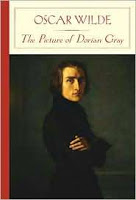
The Picture of Dorian Gray by Oscar Wilde: Book Review

It seems like I run into references to Dorian Gray pretty frequently (Most recently in James Blunt's song "Tears and Rain"). I decided to pick this up because I was tired of not understanding the references. The Picture of Dorian Gray begins with one of Dorian's friends, a painter named Basil Hallward, just finishing his portrait. Lord Henry is visiting Basil and happens to meet Dorian. Henry sort of becomes the devil on Dorian's shoulder, asking something like, "Isn't it a shame that this portrait will be forever beautiful, perfect, innocent, and pure, but you will age, wither and die?" This hits Dorian hard. In a temper tantrum, he prays that the opposite should happen. He wants to live unsullied and have the portrait bear the marks of his living. His prayer is answered. This frees Dorian to live the life of cruelty, debauchery, and addiction that he wants. The portrait is hidden away in the attic and it looks more and more horrifying. But since Dorian is forever a beautiful 20-year-old Adonis, no one ever knows about his secret life. To me, this book was cautionary tale about not judging by appearances and how you might be able to hide your sins, but you can't hide them forever. I was shocked to read the introduction (after finishing the book) and find out that the critics at the time of publication thought the book was immoral and terrible! The first version included some "homoerotic" scenes which upset readers in the 1890's. Wilde's popularity wasn't helped by the fact that he was jailed for two years, basically for homosexuality. It seemed to me like Oscar Wilde and Dorian Gray became the same person in the minds of readers and no one wanted anything to do with the book or the author.…

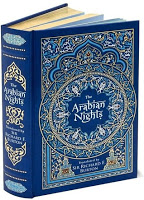
The Arabian Nights: Book Review

For those 2 people who don't know, The Arabian Nights is sort of a collection of short stories told in Arabia (which seems to include India and parts of China) waaaaaay back in the day. The framework of the story is about a sultan who caught his wife cheating on him. After he has her killed, he decides to take out his revenge on the entire sex, so he marries a different wife every day and has her killed the next morning. Scheherazade is the Grand Vizier's beautiful, intelligent daughter. She realizes that this can't go on, so she comes up with a plan. She asks to be the next wife of the sultan, and she starts telling him a story on their wedding night. But buried within that story is another story. The sultan is so intrigued by the story that he decides to let her live so he can find out how the story ends. She keeps stringing him along like this, theoretically for 1000 nights, until he relents and gives her a full pardon and takes her for his real wife. But that's only a very small part of the book. The biggest part of the book is the stories Scheherazade tells the sultan. Included are Aladdin, Ali Baba, Sinbad, and others that we've probably all heard in one form or another. I just picked this up because I wanted to see what it was all about. This version was very readable. It was interesting to see a slice of Arabian life. I would catch myself thinking, "They treat women so badly over there" and then I would remember that when these stories were first told, women were treated badly pretty much everywhere. But then there would be some stories where the women had surprising freedom and…

The Once and Future King by T.H. White: Book Review

This is the story of King Arthur, Guenever and Lancelot. I think we all know how that goes. I've been reading this off and on for the past six months. I would start to read it, lose interest, and pick up something more interesting. I finally decided that it was time to either give up on it or finish it because I was tired of it taking up space in my nightstand. That was a good place for it because I couldn't read more than a chapter or two without falling asleep. That's not like me at all. The first part of the book is like the Disney movie, The Sword in the Stone. Should be pretty cool, right? I liked that movie. But this is terrible. The basic plot is the same, but the writing is pretty dense and dry. The author keeps referring to Sir Thomas Malory's Le Morte d'Arthur. I don't know if The Once and Future King is supposed to be a "good parts" translation of the first book, but I sort of got the feeling that's how it worked. Either way, it did feel like a long (677 pages in my edition, to be exact) book report. Can't you remember those book reports you wrote when you were a kid? "This happened, then this happened, then something else happened, The End." That's how this felt. The characters never felt real, the place never felt real, and I never really cared about any of it. Probably the best parts of the book didn't even involve the "real" story at all. T. H. White would occasionally go off on tangents about how people and politics really haven't changed so we shouldn't think that we're any better than what we may be tempted to look on as the…

To Kill a Mockingbird by Harper Lee: Book Review

In this classic tale of growing up in the Jim Crow South, Scout Finch captures readers' hearts as she plays her games and begins to lose her innocence as she watches the adults in her town. A trial that has been defined by race is making everyone show his or her true colors and it's an eye-opening experience for Scout. I've read this probably 4 or 5 times by now, but I've never actually reviewed it. I really want to say, "I love this book. Not a passing love, but a deep and abiding, down to the soul love. Read it." And leave it at that. But I won't let myself do that. I love everything about this book. The biggest thing for me are the characters, especially Atticus and Scout. I love Atticus. No, really. I do. He's such a good man. As several other characters point out, he's the same on the street as he is in his house. He tries to live a life that permits him to look his children in the eyes. As someone else points out, he's the town's conscience. They trust him to do the right thing, often in spite of them. He never lets them down. I noticed this time how much it costs him. Scout is such a little motherless tomboy, I just have to love her too. She's pretty passionate about everything and she's still so innocent. This time around, I actually noticed Jem. I've overlooked him in the past, but I can see that he's going to follow in his father's footsteps. The story is such a well-done contrast. There are the carefree, almost idyllic days of Scout and Jem's childhoods painted against a background of racism and pettiness and revenge. Harper Lee makes her point about race issues…

The King of Elfland’s Daughter by Lord Dunsany

The twelve men making up the parliament of Erl go to their ruler one day and ask for a magic lord. The ruler agrees to grant their request and sends his son to steal and marry the King of Elfland's daughter. But of course finding her and keeping her can't be that easy. In the introduction to this edition, Neil Gaiman compares Lord Dunsany's writing to the King James Bible. I honestly wouldn't have thought of that, but the description is perfect. The language is beautiful, but, for me, dense and a little hard to wade through. I kept thinking of those old fairy tale books by Andrew Lang, like The Orange Fairy Book. As I remember it, those books had very little dialog and just describe the story happening. That's how this was. I also mentally compared it to a beautiful, old silent movie. You're watching this beautiful story unfold, but there's no dialog. I guess I like a lot of dialog. As I read the book, I kept thinking of a phrase my yoga teacher uses: "like you're moving through honey." That's the pace at which this book moves: like you're moving through honey. I normally tear through books so I never quite got my mind slowed down enough to fully enjoy and understand this book. When I did manage it, for a couple of paragraphs at a time, I could see what all the fuss is about. But the rest of the time, I just wished we could get on with the story. That is, if I didn't fall asleep first. By the end, Lirazel had gotten on my nerves. She wanted to have her cake and eat it too. Who doesn't, really? But asking her father to use his last all-powerful rune to give it to…